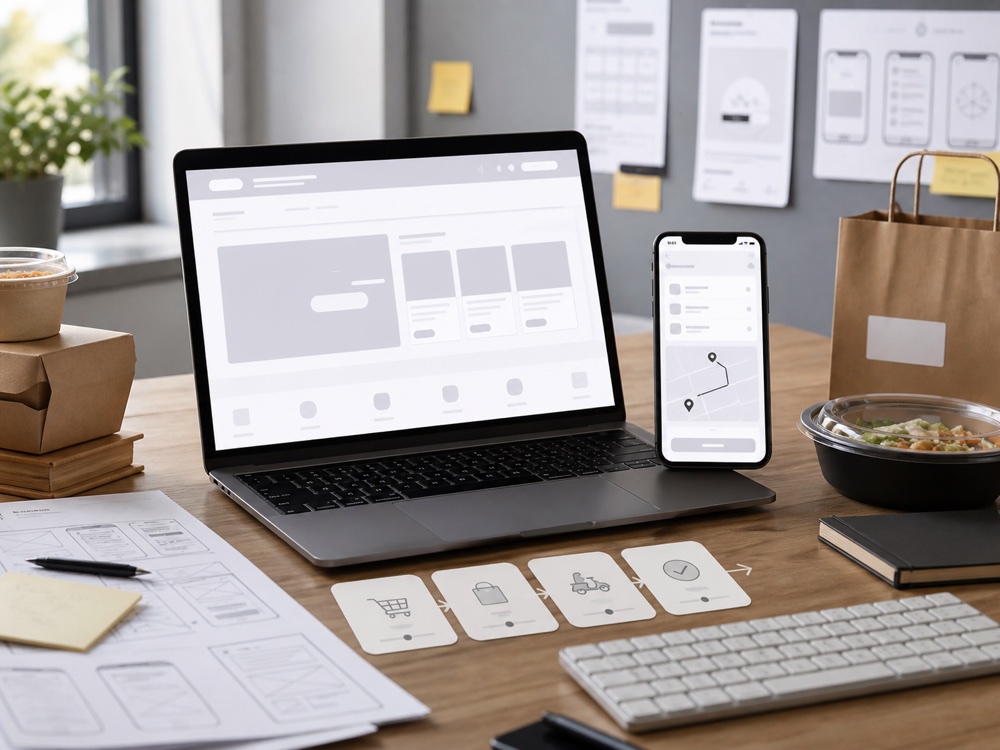
A Dubai business website should include a clear offer, service pages, proof, location signals, fast mobile performance, WhatsApp or lead forms, analytics, structured data, FAQs and simple next steps. The website should help a visitor understand who you serve, what you do, why to trust you, and how to contact you without friction.
The essential pages
Most businesses need a homepage, services page, individual service pages, work or case studies, about page, contact page, privacy policy, and conversion-focused landing pages for priority campaigns. Service pages should not be thin. They need definitions, process, deliverables, use cases, pricing context, FAQs and proof.
Talk The Taste builds this through web design and website development in Dubai.
Conversion elements that matter
- A direct headline that names the service or outcome.
- Visible phone, WhatsApp, email or booking options.
- Proof such as work samples, reviews, client categories or results.
- Clear service sections with answer-first explanations.
- Fast-loading images and readable mobile layouts.
- Forms that ask only for information needed to qualify the lead.
Local SEO signals for Dubai
A Dubai website should mention the city, relevant neighbourhoods only when genuinely served, UAE business context, contact details, office address if applicable, opening hours where relevant, and schema such as Organization, LocalBusiness, Service, Article, FAQPage and BreadcrumbList. These signals help search engines and answer engines understand location, entity relationships and service relevance.
Should every service have its own page?
Yes, when the service has distinct search intent and a real commercial offer. For example, restaurant marketing, social media management, branding, website development and mobile apps should not all compete on one generic page. Each page should answer the specific buyer questions for that service.
What about Arabic content?
Arabic content is useful when the business serves Arabic-speaking customers or wants stronger UAE relevance. The Arabic version should preserve layout, calls to action, forms and navigation while translating the visible text accurately. It should not create broken duplicate pages or hide important English URLs from crawlers.
Technical requirements
The site should load quickly, use clean URLs, be crawlable without broken scripts, include indexable headings, compress images, use HTTPS, avoid intrusive popups, and track conversions through Google Analytics, Google Search Console and ad platform pixels where relevant.
Decision factors before redesigning
Before redesigning, decide which services are most profitable, which pages need to rank, what counts as a qualified lead, what proof is available, and what content is missing. A good redesign is not only visual. It improves discovery, trust and conversion.
If website traffic comes from campaigns, connect landing pages with social media marketing and clear pricing or enquiry paths on pricing and contact.
FAQs
How many pages should a Dubai business website have?
A small business often needs 6 to 12 core pages. More competitive services need dedicated service pages, supporting articles and case studies.
Is WhatsApp important on a Dubai website?
Yes. Many UAE buyers prefer WhatsApp for quick enquiries, so it should be visible without replacing forms, phone and email for users who prefer those channels.
Does website design affect SEO?
Yes. Structure, page speed, mobile usability, internal links, headings, schema and content depth all affect how well search engines can understand and rank the site.
Should pricing be visible on the website?
Pricing context usually improves lead quality. It can be exact pricing, starting prices, package ranges or a clear explanation of what affects cost.